
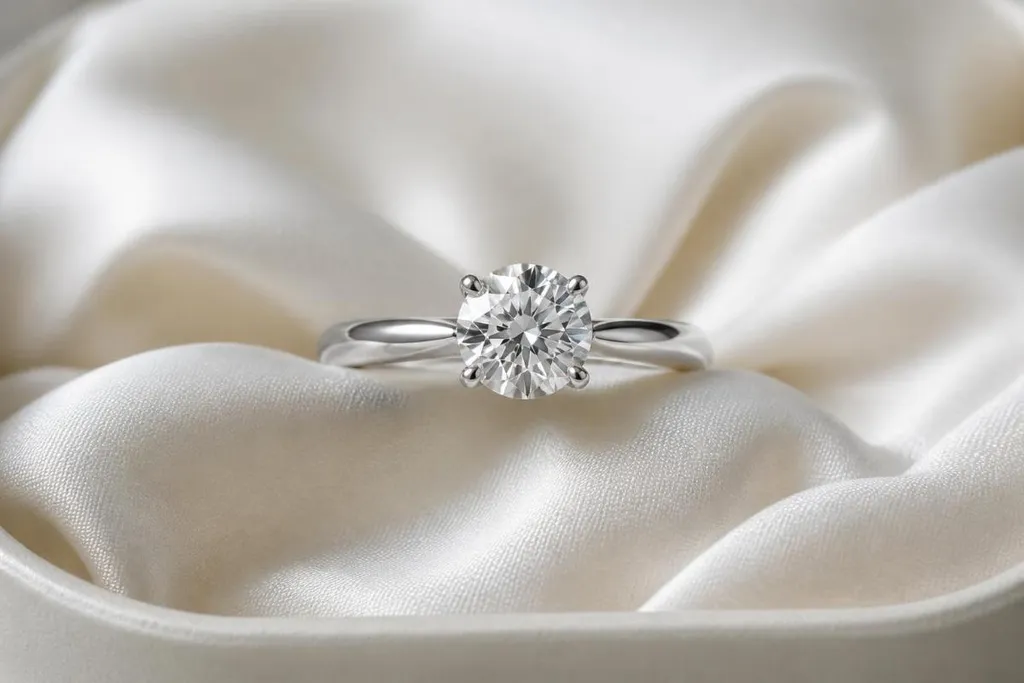
A solitaire engagement ring has a rare kind of confidence. With no elaborate surround or decorative cluster competing for attention, the design places one diamond at the centre of the story. That simplicity is precisely why the style has endured: it feels elegant, personal and remarkably adaptable.
For couples considering a modern alternative to a mined stone, exploring the lab diamond solitaire ring collection offers a useful way to compare how different cuts, proportions and settings influence the character of a solitaire. Although the principle is simple, the finished effect can range from delicate and understated to bold and architectural.
Simplicity Gives the Diamond More Presence
The defining feature of a solitaire is its restraint. Without a halo or side stones, every design decision becomes more visible, from the quality of the cut to the shape of the claws and the width of the band.
This makes the diamond itself feel more prominent. A well-cut lab-grown diamond can deliver exceptional brilliance, and a solitaire setting allows that performance to remain uninterrupted. It also means that shape plays a larger role in the overall appearance. A round brilliant feels classic and balanced, while an oval or marquise creates a more elongated, graceful silhouette. Emerald cuts offer a quieter, more refined style, relying on broad flashes of light rather than intense sparkle.
The absence of extra detail does not make the ring plain. Instead, it gives proportion, craftsmanship and stone selection greater importance.
Lab-Grown Diamonds Offer Greater Design Flexibility
Lab-grown diamonds share the same chemical, physical and optical properties as mined diamonds. Their difference lies in origin, which often gives buyers more flexibility when balancing size, quality and budget.
That flexibility can be especially valuable in a solitaire, where the centre stone carries the entire visual impact. Someone may choose a two-carat oval diamond not simply for a larger appearance, but because its length flatters the finger and gives the ring a more elegant profile. Another person may prefer a one-carat round diamond with a superior cut because they value brightness, symmetry and a more restrained scale.
This freedom allows buyers to focus on what matters most to them. Rather than treating carat weight as the only measure of quality, they can consider cut precision, colour, clarity and how the stone sits within the overall design.
The Setting Shapes the Ring’s Character
Solitaire rings may appear minimal, but the setting can change their personality considerably.
A four-claw setting exposes more of the diamond and creates a lighter, more open appearance. Six claws often feel more traditional and provide a greater sense of security around a round stone. Bezel settings surround the diamond with metal, producing a smooth, contemporary look while offering additional protection for active lifestyles.
Band width also matters. A slender band can make the centre diamond appear larger and more delicate, while a broader band creates a stronger, more modern silhouette. High settings allow more light to reach the stone and can pair neatly with a straight wedding band, whereas lower settings may feel more practical for daily wear.
Metal choice adds another layer. Platinum and white gold create a crisp, seamless look, while yellow gold introduces warmth and contrast. Rose gold softens the design and can make a classic solitaire feel more romantic.
A Style That Adapts Over Time
One reason solitaire rings remain so enduring is their versatility. They pair easily with plain, pavé-set or contoured wedding bands, allowing the overall look to evolve without replacing the engagement ring itself.
They also move comfortably between different wardrobes and occasions. A solitaire can feel polished with formal clothing, yet never overly elaborate in everyday settings. Its simplicity makes it less dependent on passing trends, which is particularly important for jewellery intended to be worn for decades.
Final Thought
A solitaire lab diamond ring proves that timeless design does not need to be conventional or predictable. Its appeal lies in clarity: one beautifully chosen stone, supported by thoughtful proportions and precise craftsmanship.
The best choice is not necessarily the largest diamond or the most fashionable cut. It is the ring that feels balanced on the hand, suits the wearer’s lifestyle and continues to feel personal long after the proposal.